
Practice Perfect 951
Should We Stop Using Gait Plates for Intoeing?
Should We Stop Using Gait Plates for Intoeing?

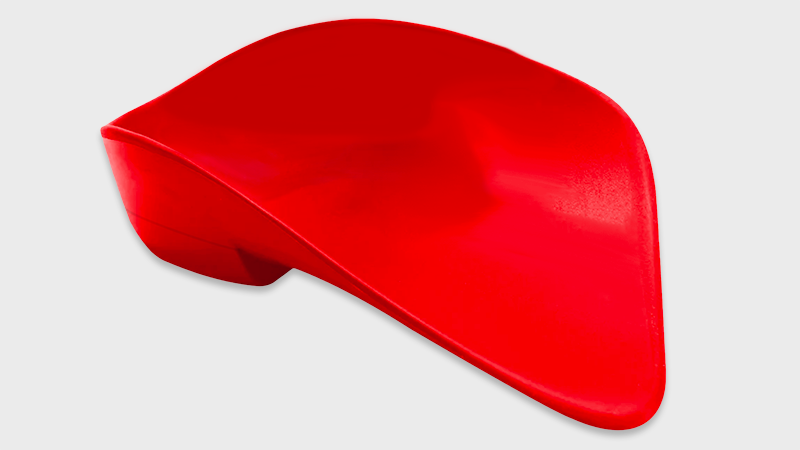
The other day, I was having a conversation with a colleague, and they mentioned the treatment of intoeing with gait plates as something that may be obsolete. As someone who occasionally uses gait plates, I was surprised to hear this. Since I like to stay as up to date as possible and provide the best care I can to my patients, I was concerned that my knowledge may be out of date. So…off to the research we go!
Before discussing the details of the unfortunately limited research on this topic, let’s make a few comments about intoeing and gait plates. In my practice, I most commonly see pediatric patients with this as a primary complaint (rather than adults). Typically, this is painless, and the parents are concerned that their child’s foot is turning inward with or without tripping. The examination consists primarily of determining the level at which the intoeing occurs, screen for concerning underlying neurological or musculoskeletal issues, and make sure there’s no pain.
Since this can occur from the hip, femur, knee, tibia, or foot, the examination should focus on these levels. A quick exam may include hip rotation (flexed and extended), patellar position, malleolar position, foot examination for metatarsus adductus, muscle strength testing, abbreviated neuro exam, and a gait examination. I also check for skewfoot because I’m more likely to treat this condition regardless of symptoms (I see a lot of very symptomatic adult skewfoot).

In more than 90% of cases, I recommend observation, cross legged sitting (avoiding the W or tailor’s position), supportive shoes, and reassure parents that this doesn’t require treatment as long as the child remains painless, tripping doesn’t worsen, and there are no other concerning signs or symptoms.
I can only recall one time in my career that I actually referred a child to pediatric orthopedics for possible surgery, and that child had very severe internal tibial torsion, femoral anteversion, and concerning neurological changes. Occasionally, I’ll treat the rest with gait plates to create compensatory outtoeing. The actual mechanism of gait plates is not well researched, which is going to leave our original question a bit unanswered. To make the rest of our discussion a little simpler, we’re going to focus on simple intoeing caused by femoral anteversion or internal hip position (the most common causes of intoeing that I see), avoiding pedal deformities like metatarsus adductus. I’m also going to avoid the variable terminology that might cause some of you to write in screaming at me! We won’t debate the “version” versus “torsion” versus “position” issue (valid but beyond the scope of today’s discussion).
The basic concept behind an outtoeing gait plate is that the distal edge of the orthosis is angled so the lateral side is distal to the medial side (see Figure 1). For the intoeing child, this would cause them to roll onto that distal point as they load the forefoot during gait, which would make it very hard to push off. As a result, they externally rotate the leg, causing the angle of gait (or the foot progression angle, if you prefer) to increase. As the foot rotates out, the intoeing decreases. As an aside, it might be obvious to realize that cutting the distal edge of the orthosis opposite to that seen in Figure 1 (with the medial edge more distal) would treat outtoeing – though I have to say that’s a little more complicated.
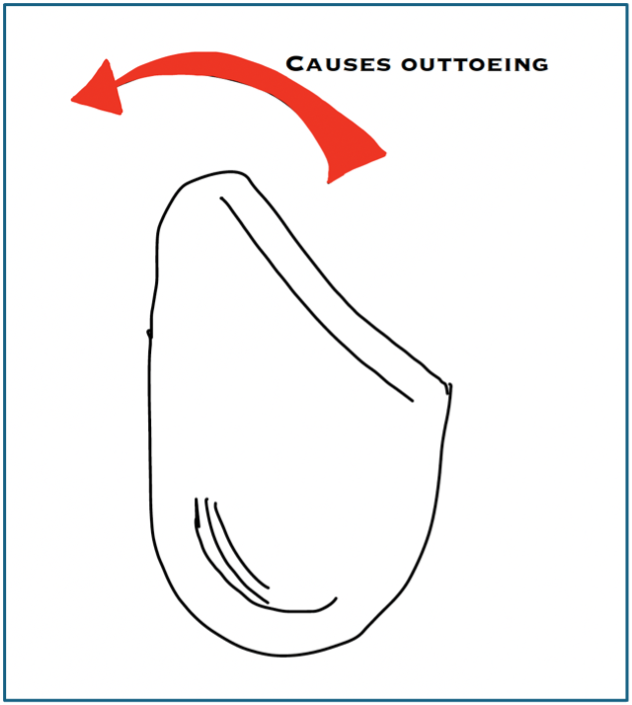
Figure 1. Outtoeing gait plate used to treat intoeing on the left foot. Lateral distal edge of the orthosis is cut more distal than the medial side.



With all that as preamble, let’s get to the question: do gait plates work for intoeing and should we keep using them or stop?
A 2015 study by Ganjehe, et al1 examined 17 intoeing children aged 4 to 10-years-old, comparing angle of gait and center of pressures barefoot, in shoes only, and in shoes with a gait plate. The gait plate/shoe combination led to 11.1 degrees of improvement while the shoes alone led to 3.85 degrees increased angle of gait.
Ganjehe’s results were consistent with a previously performed systematic review by Uden and Kumar in 20122, which examined 5 studies (yup, only five) and found a general but tendency toward gait plates improving foot progression angles, though all with weak methodological quality.
A recent study in 2024 by Parian and colleagues studied 11 girls (18 feet) between 7 and 10-years old with symptomatic intoeing.3 They were randomly assigned to either outtoeing gait plate or a lateral sole wedge and examined to see if there was an increase in the foot progression angle before and after 4 weeks. The lateral sole wedge increased foot progression angle by almost 10 degrees and 3.3 degrees with the gait plate. The authors conclude both methods improve the angle, but it seems the lateral sole wedge was much more effective.
This research suggests outtoeing gait plates do have a potentially beneficial effect in externally rotating the foot with a likely modest effect but with relatively weak research support. Unfortunately, the evidence is somewhat weaker as to whether this equates to decreased symptoms such as pain or falls, and I was not able to find any research relating to the kinetic or kinematic effects on the rest of the extremity (knee and hip). We’ll have to wait for more research to fully answer this question.
Until then, best wishes.

Jarrod Shapiro, DPM
PRESENT Practice Perfect Editor
[email protected]


- Ganjehie S, Saeedi H, Farahmand B, Curran S. The efficiency of gait plate insole for children with in-toeing gait due to femoral antetorsion. Prosthet Orthot Int. 2017 Feb;41(1):51-57.
Follow this link
- Uden H, Kumar S. Non-surgical management of a pediatric “intoed” gait pattern–a systematic review of the current best evidence. J Multidiscip Healthc. 2012:5:27-35.
Follow this link
- Parian S, Farahmand B, Saeedi H, Cham MB. Effectiveness of gait plate insole and lateral sole wedged shoes on foot progression angle in children with in-toeing gait: A prospective randomized control trial. Gait Posture. 2024 Mar 1;109:120-125.
Follow this link
Overall sponsorship of PRESENT Podiatry was made possible through
the support of our sponsors:

















Comments
There are 0 comments for this article