

Sole Purpose 109
General Surgery
General Surgery
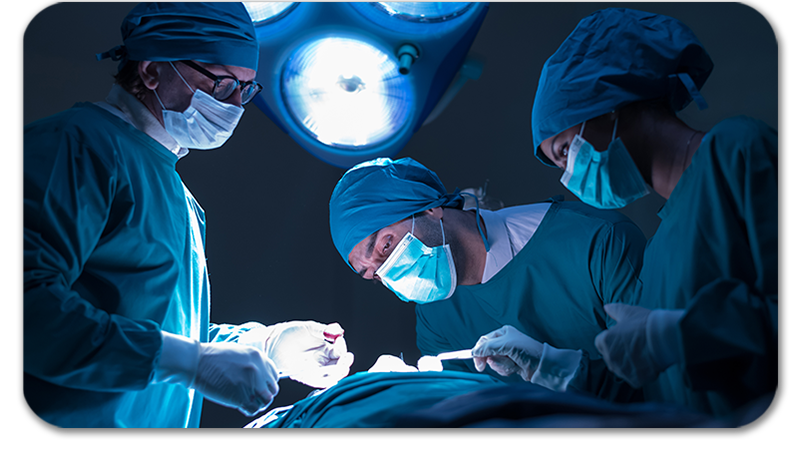
These past two weeks, I had the privilege of rotating on general surgery as a resident. My memories of general surgery as a podiatry student are sparse but vivid—I remember encouraging patients to chew gum to help wake up their bowels, walking them through those first post-op steps, noticing just how exhausted the residents were, and feeling completely terrified holding retractors in the OR.
This rotation felt different. It was a meaningful two weeks, filled with lessons that went far beyond the technical. I was deeply impressed by the general surgery residents—I admired their efficiency, their composure, and the way they care for patients in some of their most vulnerable moments. I genuinely enjoyed getting to know them and learning more about the specialty they’ve chosen.
Today, I want to share some of the most impactful things I learned during my time on general surgery.

Holy Tissue Planes
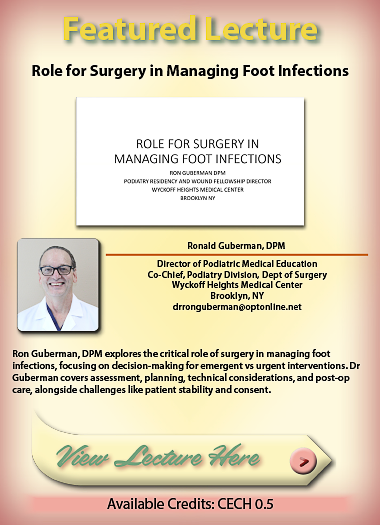
One of the most fascinating parts of this rotation was being in the OR and truly appreciating tissue planes in a way I hadn’t before. Watching the attendings and residents carefully and deliberately dissect through each layer felt equal parts technical and artistic.
One of my favorite things to observe was their use of Bovie dissection—especially since they often weren’t working with a tourniquet. Their control of bleeding was incredibly precise, and the added space within the abdomen allowed for beautifully visualized planes that made the anatomy come alive in a different way.
Even closure felt like its own learning experience. I often had the chance to help with running subcutaneous sutures, finishing with skin glue and no overlying dressing. It was simple, clean, and intentional—another reminder that every step, even the final one, carries its own skill and thoughtfulness.




You Think You’re Good at Something
I’d usually say I’m competent at suturing. As a resident who’s in the OR most days, I don’t practice on a suture board nearly as often as I did as a student. But general surgery humbled me—in the best way.
They closed in a way that was completely different from what I was used to, using a subcutaneous technique I had never tried before. The first time I attempted it on my own (on a long abdominal incision, no less), I’ll admit it didn’t go smoothly. I had to go back and place additional sutures to get the closure where it needed to be. Even finishing the running subcutaneous stitch tripped me up—their technique, a French knot, involves hand ties passed through themselves and then buried deep. It was new to me, and I felt it.
So, I went home that night and practiced. Not out of perfectionism, but out of respect—for the craft, for the patient, and for the opportunity to keep getting better.
It was a simple but grounding reminder: no matter how comfortable you feel with a skill, there is always more to learn, another technique to refine, another perspective to gain. And honestly, that’s one of the best parts of this whole process. I’m already excited to bring this technique back and share it with my attendings.


The Residents Themselves
I had the chance to observe several robotic cases, and one in particular has stayed with me. Mid-procedure, we ran into an unexpected complication—part of an instrument broke off and was lost within the abdomen. It could have easily turned chaotic, but it didn’t.
The senior resident and attending remained completely composed. They approached the situation methodically, scanning the abdomen piece by piece, adjusting their plan in real time. An X-ray was called, the location was carefully triangulated, and ultimately, the fragment was safely retrieved. It was a masterclass in staying calm under pressure.
At the same time, I was very aware of how out of my element I felt—robotic surgery, a different anatomical field, and now a complication layered on top of it. But the senior resident met that moment with clarity and intention. They guided me directly—what they needed, where I could stand, how I could help—without ever making me feel in the way or uninvolved.
There was no frustration, no raised voices—just focus, teamwork, and steady leadership. I stayed engaged the entire time, and honestly, I walked away deeply impressed. It made me reflect on my own approach to teaching in high-stress moments. Their ability to remain patient, inclusive, and composed, even during a complication, is something I hope to carry forward in my own training.
Laparoscopy
I haven’t taken the formal scopes course yet—I’m looking forward to it this fall—but getting to be part of laparoscopic cases felt like unexpected prep for arthroscopy.
The workspace alone is so different. The insufflated abdomen offers significantly more room compared to the tight, distracted ankle joint. That extra space gave me the opportunity to slow down and be more intentional, working on controlled camera movements, stabilizing my hands, and anticipating how to assist with instruments.
It was a small but meaningful crossover. Even though the anatomy and procedures differ, the fundamentals of visualization, precision, and economy of motion translate more than I expected.
Stepping away from this rotation, I’m carrying more than just new techniques—I’m taking with me a renewed sense of humility, curiosity, and respect for the craft of surgery. General surgery challenged me to be a beginner again, to slow down, to listen more closely, and to find growth in the moments that didn’t come easily. It reminded me that good surgery isn’t just about what you can do with your hands, but how you think, adapt, and show up for your team and your patients. I’m grateful for the lessons, the people who taught them, and the perspective I now bring back with me—one that I know will continue to shape the kind of surgeon I’m becoming. And at the very end of the day, thank goodness I am a podiatrist and never have to help treat hemorrhoids again.


This blog and the overall sponsorship of PRESENT Podiatry was made possible through the support of our sponsors:








Comments
There are 0 comments for this article