

Practice Perfect 804
Is the BMI a Good Indicator of Obesity?
Is the BMI a Good Indicator of Obesity?

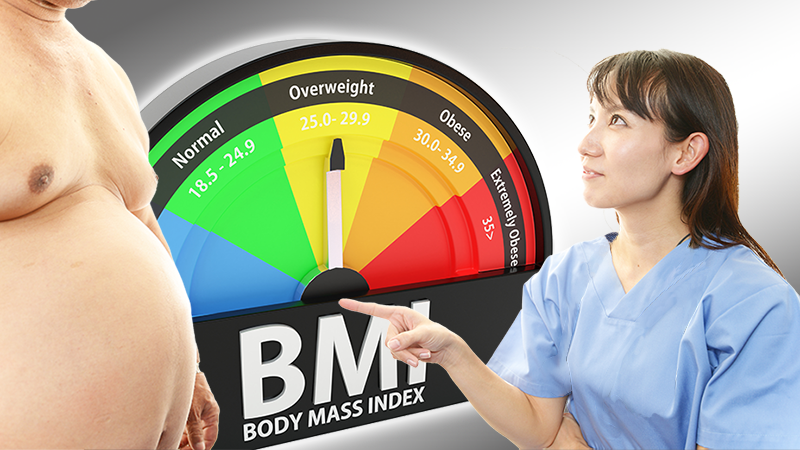
Everyone in medical school is taught about body mass index (BMI) as a classification and measure of overweight and obesity. In podiatry, obesity is a major contributor to lower extremity disease. Almost every foot and ankle disorder I know of is caused by, worsened, or somehow affected by excess body weight. It’s highly common in clinical practice to determine a BMI to better appreciate the extent of disease and to assist us in making decisions.
Let’s Review: How Is Overweight and Obesity Classified1?
| BMI (kg/m2) | Description | Classification |
|
< 18.5 |
Underweight |
|
|
18.5 – 24.9 |
Normal |
|
|
25.0 – 29.9 |
Overweight |
|
|
30.0 – 34.9 |
Obesity |
I |
|
35.0 – 39.9 |
|
II |
|
> 40 |
Extreme Obesity |
III |
How To Calculate a BMI
Divide the patient’s weight (kilograms) by the height (meters2) or kg/m2.
Here is a link to the CDC BMI Calculator>>>
What Other Methods May Be Used?
Waist circumference is also a commonly used metric because it correlates with the risk of multiple diseases and is commonly used during the treatment of overweight and obesity.
| High Risk |
| Men > 102 cm (> 40 inches) |
| Women > 88 cm (35 inches) |
This measurement is taken not at the waist but rather at the abdomen at the level of the umbilicus. However, as waist circumference only tells us risk of disease, rather than classifying or describing obesity, it is not an alternative to BMI.





Where Did BMI Come From?
Given the ubiquity of the use of BMI, one must wonder from where it arose? In short, BMI is derived from the “Quetelet Index” created by a Belgian astronomer and statistician named Lambert Adolphe Jacque Quetelet (1796-1874). No, he wasn’t a physician. He was essentially a statistician who attempted to describe the “average” person, starting the science of anthropometry, using numbers to determine human norms. Unfortunately, this type of normative data was used during the eugenics movement in the early 1900s. Not the most auspicious association, I’m sure.
What Are the Problems With BMI?
It appears nothing gets by unscathed in modern medicine, and BMI also has significant issues. The first is that BMI is not a valid differentiator between overall body mass and fat mass, which is pretty much the purpose of this variable. A person can have a high BMI but still have a low-fat mass, and the opposite is also true. BMI may be incorrectly affected by gender, age, ethnic group, leg length, and muscle mass. For example, data from the famous NHANES study found that the BMI correlated better with lean body mass rather than fat mass in men2. Using waist size is a better indicator of obesity. BMI also does not describe the distribution of adiposity in the body, which is also important. For example, central adiposity is a risk factor for cardiac disease, nonalcoholic fatty liver disease, dyslipidemia, hypertension, diabetes, and sleep apnea3,4.
Take as an example a man who is a professional weightlifter. Let’s say he’s 5’7” (1.45 meters) and, due to the increased mass of muscle, weighs in at 190 lbs (86.2 kg). His BMI would be 29.8, considered overweight and very much on the border of class 1 obesity. However, this person is unlikely to have too much body fat, so the BMI inaccurately represents this person’s health. Obviously, being obese will lead to a high BMI, but this example shows that having an increased BMI doesn’t necessarily mean you are overweight. Similarly, for those who lose muscle mass – patients suffering from a number of acute and chronic diseases such as cancer– are not accurately described by the BMI5.




Unfortunately, there is no current alternative, and the methods available to measure body fat content are not accurate enough for medical practice and are not convenient. Despite its significant limitations and inaccuracies, body mass index is all we have. Until a new, easy, more accurate method is discovered, we’ll have to live with BMI.
Best wishes.

Jarrod Shapiro, DPM
PRESENT Practice Perfect Editor
[email protected]


-
BMI OC. Clinical guidelines on the identification, evaluation, and treatment of overweight and obesity in adults.
Follow this link -
Flegal KM, Carroll MD, Ogden CL, Curtin LR. Prevalence and trends in obesity among US adults, 1999-2008. JAMA. 2010 Jan 20;303(3):235-241.
Follow this link -
Jensen MD. Role of body fat distribution and the metabolic complications of obesity. J Clin Endocrinol Metab. 2008 Nov;93(11Suppl1):S57-S63.
Follow this link -
Perrault L. Obesity in adults: Prevalence, screening, and evaluation. UpToDate. Last updated April 27, 2021.
Follow this link -
Gonzalez MC, Correia MI, Heymsfield SB. A requiem for BMI in the clinical setting. Curr Opin Clin Nutr Metab Care. 2017 Sep 1;20(5):314-321.
Follow this link



















Comments
There are 0 comments for this article