

Practice Perfect 772
Should Fructosamine Replace Hemoglobin A1c for Evaluation of Blood Sugar Control in Diabetics?
Should Fructosamine Replace Hemoglobin A1c for Evaluation of Blood Sugar Control in Diabetics?

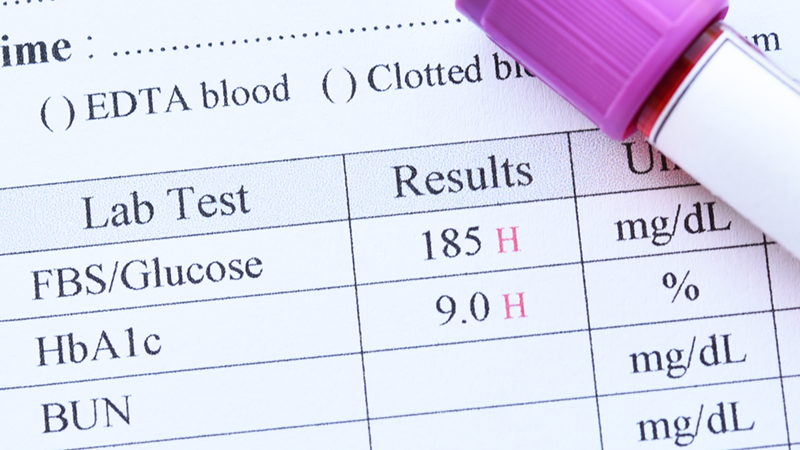
One of my favorite office-based tests is the point of care glycated hemoglobin (POC A1c). In about 5 minutes, I can assess the blood sugar control of my diabetic patients. It is also a reimbursable office test, which doesn’t hurt. We are even starting to notice a trend where there is a positive correlation between patient ignorance of their most recent A1c level and poor blood sugar control. If I ask a patient, “What’s your most recent A1c?” and they reply, “I don’t know”, then their A1c is likely above 9%. This is such an interesting phenomenon that a couple of my residents and I are planning a research study to see if it’s true!
I’ve noticed an interesting phenomenon - If I ask a patient, “What’s your most recent A1c?” and they reply, “I don’t know”, then their A1c is likely above 9%
Now, as good as the A1c test is, there is another test that has existed for some time (since about the 1980’s) but doesn’t seem to have gained as much use. That test is serum fructosamine. Let’s explore this test as it compares with the A1c and see if there is a place for it in practice.

What is fructosamine?
Fructosamine refers to glycosylated albumin and serum proteins. Similar to glycosylated hemoglobin, fructosamine is formed by the nonenzymatic combination of glucose but this time with a protein in the blood. Think of this as essentially the same thing as the hemoglobin A1c except instead of looking at hemoglobin, we’re analyzing glycosylated proteins such as albumin.1
How is fructosamine used to monitor diabetes?
Just like in hemoglobin A1c, proteins in the blood such as albumin become glycosylated in increasing amounts with increasing blood sugars. Thus, it is possible to equate serum glycose levels over time with fructosamine levels in patients with diabetes.

What time frame does fructosamine cover?
Since the half-life of albumin is 14-16 days and that of other proteins in the blood is between 3 and 23 days, fructosamine examines blood sugar over a 2 - 3-week period. This is a much shorter time than the 6 - 8 weeks covered by the A1c (since hemoglobin has a 60-day half-life). As a result, fructosamine is considered to be a more responsive marker of blood sugar control.
Fructosamine is considered to be a more responsive marker of blood sugar control than A1c, reflecting blood sugar levels over a 2-3 week period compared with 6-8 weeks for A1c
How is glycated albumin different from fructosamine?
Glycated albumin is actually a part of the group of proteins within fructosamine but can be ordered as a separate test. This test has the advantage of not being subject to concentrations of other serum proteins. It also has a 3-week half-life, so examines short term blood sugar control. Since it is not affected by hemolytic processes or abnormal hemoglobin, it may be a better marker for blood sugar control than HbA1c. It has also been found to be a better marker for blood sugar control in pregnant patients and those with anemia, postprandial hyperglycemia, and diabetes using insulin.2





Are there situations where fructosamine should NOT be used?
Since this test involves serum proteins, any condition involved with protein wasting such as nephrotic syndrome or protein-losing enteropathies will result in an inaccurate result. It can also be affected by albumin concentration changes and thyroid disease.

Since we’re asking this question about fructosamine, let’s ask it about hemoglobin A1c. Are there situations where the HbA1c should NOT be used? The answer, of course, is yes. In disorders that affect hemoglobin concentrations, this test will be falsely low. These disorders include hemolytic or iron deficiency anemias, hemoglobinopathies, pregnancy, and uremia.3,4
What are the normal values for fructosamine and how should it be interpreted?
In patients with a normal albumin level, fructosamine should be 200-285 mmol/mL.5 Increased levels of fructosamine are seen in hyperglycemic states in the same 1:1 manner as hemoglobin A1c. A fructosamine level of 266-312 mmol/mL has been shown to correlate with a hemoglobin A1c of 7%.3

Bottom line this for me, Shapiro
Well, since you asked…
Fructosamine is not going to replace HbA1c for the survey of blood sugar control in diabetics (A1c remains accurate and available), but it is useful for determining control over a shorter time-period and in those cases where the A1c might not be accurate.


-
Armbruster DA. Fructosamine: structure, analysis, and clinical usefulness. Clin Chem. 1987 Dec;33(12):2153-2163.
Follow this link -
Koga M, Kasayama S. Clinical impact of glycated albumin as another glycemic control marker. Endocr J. 2010;57(9):751-762.
Follow this link -
Selvin E. Measurements of glycemic control in diabetes mellitus. UpToDate, current through July 2021.
Follow this link -
Freitas PAC, Ehlert LR, Camargo JL. Glycated albumin: a potential biomarker in diabetes. Arch Endocrinol Metab. May-Jun 2017;61(3):296-304.
Follow this link -
Kotus, J. Fructosamine. https://emedicine.medscape.com/article/2089070-overview. Updated Oct 01, 2019. Accessed 8/21/2021.
Follow this link



















Comments
There are 0 comments for this article