

Sole Purpose 111
So, You are Interested in Fellowship
So, You are Interested in Fellowship

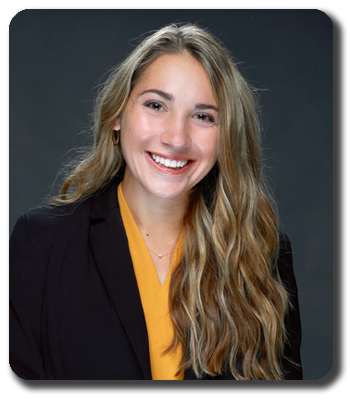
PRESENT Podiatry would like to congratulate
Savannah Santiago, DPM
on her selection as Chief Resident at Ascension St Vincent Podiatric Medicine & Surgery Residency
Today, I want to shed some light on one of the more confusing—and, at times, challenging—seasons of my training: exploring, navigating, and ultimately applying to fellowships. Now, I’ll offer a quick disclaimer—there are people who genuinely enjoy this process and walk away with nothing but positives. But if you ask around, you’ll find that many of us experienced a similar mix of uncertainty, overthinking, and “what am I doing?” moments along the way.
With that said, I’m incredibly proud and excited to share that I will be continuing my surgical education at the Illinois Bone and Joint Institute (IBJI) Foot and Ankle Fellowship under Dr Brian Burgess. It looks like the Midwest is keeping me around for at least one more year—and honestly, I could not be more excited!
To start: Why are you thinking or considering a fellowship? What makes you consider it? What are your goals? Do you feel like you are weak in any certain areas you want experience in?
These are some big questions to be answering. Of course, I can only speak about my own experience. I am very lucky to be at an extremely well-rounded program where I finished my numbers and diversity within my first year. Very few graduates of my residency program, Ascension St Vincent Indianapolis, pursue a fellowship, and I think part of that is because of how well rounded our training is. However, for me personally, I believe that a fellowship is easily communicable with the rest of the medical field and could theoretically communicate my training and experience to any other medical specialty or hospital. Do I think you can do just fine without a fellowship? 100%. I want another year of structured learning and refining. Additionally, I have a strong interest in working with industry, doing research and being involved and I believe that fellowship is an opportunity to get your foot in the door and do additional networking.
For anyone going through this process, I highly recommend going to the ACFAS website and looking at the fellowship questions and resources HERE.
A Bit of a Timeline
Toward the end of my intern year, I started doing broad, low-pressure research on fellowships. I had a sense that I was interested in certain subspecialties within podiatry, but nothing was fully defined yet—and that was okay. This phase was about exposure, not decisions. Naturally, I opened an Excel sheet (because, truly, I’m not myself without a running list somewhere) and began working through the American College of Foot and Ankle Surgeons (ACFAS) directory of accredited fellowships. I asked around—co-residents, attendings, anyone who might have insight—just to get a feel for different programs and reputations.
By the summer at the start of my second year, that broad list became more focused. I narrowed it down to about ten programs that genuinely felt like a potential fit. I reached out with introductory emails, attaching my CV and asking if I could learn more about their fellowship. Not every program responded—and that’s normal, especially this early—but many did. I was able to connect with current or incoming fellows, which was incredibly helpful. Those conversations gave me a clearer picture of day-to-day life, surgical exposure, and overall culture. During this time, I also worked on refining my CV, so it accurately reflected my experiences and was up to date.
Around October of my second year, things started to feel more real. That’s when I made the decision that I was all-in on pursuing fellowship. I began asking for letters of recommendation from faculty I worked closely with—people who had seen me operate and could genuinely speak to my surgical ability and work ethic. I also had a more formal conversation with my residency director. We had discussed my interest before, so it wasn’t a surprise, but it was important to clearly communicate my goals and outline a plan.
By late fall—around November—I sent follow-up emails to programs. Think of these as your “still here, still very interested” messages. They carry a bit more weight than your initial outreach. Most programs responded, and I was able to reconnect, often speaking in more detail with current fellows about surgical volume, academic expectations, courses, and overall structure.




Now, a quick but important disclaimer: this timeline reflects my personal experience, and it can shift from year to year. That said, after those November conversations, I felt a noticeable pressure to move quickly. I had classmates already securing positions—one had a fellowship locked in by early December. It was hard not to feel like I needed to keep pace. Ultimately, I submitted my applications in late December to early January of my second year. Many fellows I spoke with had applied closer to the time of the ACFAS Annual Scientific Conference during their second year, but my cycle seemed to be trending earlier.
From January through March, I scheduled interviews and visits. For most programs, I visited first and then received an invitation to formally interview a few weeks to a couple of months later. Not every program follows that structure—some have only one interview—so don’t hesitate to ask current fellows what to expect.
That same year, the ACFAS Annual Scientific Conference took place in February. At my program, third-year residents are prioritized for conference attendance, while second-years help maintain coverage. As a result, I wasn’t able to go. It was disappointing—it’s an excellent conference and a major networking opportunity—but I adapted. I made a point to let programs know I wouldn’t be attending and focused on maintaining strong communication and consistent follow-up instead.
From everything I’ve heard (and now fully believe), the fellowship events at ACFAS—especially the dinners and networking gatherings—are a major touchpoint for second years pursuing fellowship. Is it absolutely required? No. But is it valuable? Without question. If you have the opportunity to attend, I would strongly encourage you to take it.


General Tips
A few practical tips—that I learned almost entirely the hard way.
I chose to include a cover letter with my application, and it came up in multiple interviews in a genuinely meaningful way. It gave me the opportunity to tell my story beyond bullet points and case logs. I included why I was drawn to each program, my personal connection to it, the surgical experiences that sparked my interest, and what specifically made that fellowship stand out to me. Programs can tell when you have done your homework—and when you copied and pasted the same paragraph twelve times at 1 AM.
Another small but important detail: keep your application clean and easy to navigate. Combine everything into one continuous PDF that flows well rather than sending multiple attachments that require an archaeological dig through someone’s multiple files.
Also, budget—truly budget—for both your finances and your time. Fellowship season is an investment, and a significant portion of my PTO and personal funds went toward travel, interviews, and visits. The emotional support coffee purchases alone deserve their own line item.
Finally, have at least a rough idea of your “10-year plan” or vision for the future. I was asked about this in almost every interview, and it is surprisingly easy to get stumped, if you have never thought about it beforehand. It does not have to be a perfectly mapped-out life plan, but you should be able to articulate what kind of physician, surgeon, leader, or person you hope to become.
Just as important, keep detailed notes after every conversation, visit, and interview. I kept an excel sheet of all my different thoughts, feelings and details at all parts of the process. Programs will start to blend together faster than you expect, and having your own honest impressions—the feel of the day, the people, how you felt walking out—becomes invaluable when it’s time to decide. Pay attention to culture just as much as case volume. Numbers matter, but who you are learning from and spending your days with matters more than you might think. Fellowship is a short year, but an intense one, and the environment you train in will shape that experience in a very real way.
Lastly, talk to people. There’s this unspoken sense that you’re supposed to keep your interest in fellowships quiet, but I found the opposite to be true. Being open about my goals created opportunities. The most helpful conversations I had were with current and incoming fellows—they’re closest to the process and incredibly generous with their insight and connections. Along the way, expect some silence, delays, or even rejection—it’s part of the process and rarely personal. There are so many moving pieces behind the scenes. At the end of the day, trust your gut. There will always be outside noise, but the right program is the one that aligns with your goals, your growth, and the kind of surgeon you’re becoming.
One of the hardest parts of this process—hands down—was the quiet, persistent feeling of rejection. For most of it, I was convinced I wasn’t going to land anywhere, that my CV had somehow become objectively terrible overnight (it hadn’t), and that no program was interested. At one point, a mentor very candidly—and lovingly—said, “I’m not really sure why nobody wants you,” which, while meant to be reassuring, did not exactly calm the nerves in the moment.
But here’s the reality: after talking with others who had gone through the process—or were in it alongside me—EVERY SINGLE PERSON echoed the same experience. The same doubts, the same second-guessing, the same emotional rollercoaster. There is something uniquely unsettling about fellowship applications. It’s less structured than residency interviews, a little more opaque, and just different enough to make even the most confident overachievers spiral a bit.
If you find yourself in that headspace, know this: it is not a reflection of your worth or your ability. This process has a way of making strong, capable people question themselves. Stay the course. The right program is out there, and it only takes one. Yes, this process was challenging but I would do it all over again because I am thrilled to have the opportunity to become a fellow.
In Conclusion
If there’s one thing I hope you take away from all of this, it’s that the fellowship process is far less linear—and far more personal—than it first appears. There is no perfect timeline, no universally “right” reason, and no single path that guarantees success. It’s a season that asks you to reflect honestly on your goals, advocate for yourself, and sit with a level of uncertainty that most of us are not particularly comfortable with.
For me, this journey was equal parts exciting and humbling. It pushed me to define what I truly wanted out of my training and who I hope to become as a surgeon. Whether you ultimately choose to pursue fellowship or step confidently into practice, know that both paths can lead to fulfilling, impactful careers. Fellowship is not a requirement—it’s an opportunity. One that, if it aligns with your goals, can open doors, deepen your training, and expand your perspective.
And when it comes down to it, this process—like so many parts of medicine—is about finding the right fit, not just the most impressive name. The place where you will be challenged, supported, and shaped into the surgeon you are meant to be.
Trust yourself. Keep showing up. And remember—you’ve already done harder things to get here.


This blog and the overall sponsorship of PRESENT Podiatry was made possible through the support of our sponsors:








Comments
There are 0 comments for this article