
Practice Perfect 1000
Shokunin Kishitsu
Shokunin Kishitsu

CALL FOR YOUR COMMENTS
What has Jarrod Shapiro’s Practice Perfect Blog
- 20 Years x 100 Issues - Meant to YOU?
LET’S ALL CONTRIBUTE TO A FITTING
TRIBUTE TO DR SHAPIRO!
We at PRESENT will be publishing one final issue #1001 that will serve as a tribute to the contribution that Dr Shapiro's writing of 1000 issues of Practice Perfect has made to our careers as podiatrists. If reading Practice Perfect during any or all of the last 20 years has made an impact on you, if it has contributed to the good reputation that you have in your community as THE go to foot doctor, REPLY TO THIS EMAIL and tell us your thoughts. We will compile them and publish them as a tribute and a way to say THANK YOU to this remarkable man and his remarkable achievement.
TO SUBMIT YOUR COMMENTS, simply REPLY
to this blog

After 20 years, one thousand editorials, and many rich discussions, we come to the end of the Practice Perfect editorial. It has been a fun and enriching journey through the many areas within modern day podiatric medicine, and it has been an honor to be part of this wonderful profession and a member of the PRESENT e-Learning Systems family.
Not so long ago, one of my residents, a very thoughtful and introspective person, introduced me to the concept of shokunin kishitsu. After I learned more about this concept, I could not help but think this to be the perfect idea in which to end Practice Perfect.
Shokunin kishitsu (職人 気質) is a Japanese concept that translates to “the craftsman’s spirit” or “a true artisan’s pride in their work.” Buried in the day to day, I never thought of myself in this manner, but when I reflect over my time in podiatric medicine and surgery, I find this to be a beautiful concept that is both aspirational and realistic – as well as something many of us do without realizing it.

Consider these core concepts and see if this applies to you. Many in the medical professions will find we have been doing at least some of these without being consciously aware.
- Devotion to craft for its own sake - The goal is not fame or money; it is doing the work as perfectly and sincerely as possible, again and again, over a lifetime.
- Pride + humility at the same time
- Pride: “I will not cut corners; my name is in this object or service.”
- Humility: “I’m never finished; today’s work must be better than yesterday’s.”
- Lifelong, obsessive improvement - Mastery is seen as a never-ending apprenticeship. Even revered masters still refine tiny details of their technique every day. This idea is strongly associated with stories like Jiro Dreams of Sushi, where Jiro Ono embodies shokunin kishitsu.
- Service to others, not just self-expression - A shokunin sees their work as a social responsibility: to contribute something of high quality to the community—whether that is a bowl, a chair, a plate of sushi, or even how a floor is swept.
- Careful, patient process over speed and efficiency - Modern authors often contrast shokunin kishitsu with a “get it done as fast as possible” mindset: the craftsman’s spirit values slowness, care, and emotional presence in the making.



Now, think of your life within the medical professions. I am not talking here only about podiatry but rather all medicine and its varied fields. Whether you are a doctor, nurse, technician, student, resident, fellow, or any of a number of others, you may be living these principles. I will use myself as an example since this is what I know.
I did not become a podiatric physician to become famous. For the past nineteen and a half years of practice, I have seen patient after patient, doing the work, trying to heal each patient’s disorder whenever possible. I take immense pride in my work, but I also know I am not perfect, I make mistakes, and I want to improve by continuing my education and practicing my skills. I am certain that I have learned more during my time in practice than I did during residency (as it should be in a career requiring lifelong learning). Residency constructed the foundation, but the doctor I am today evolved over time, and I know I have more to learn. Medicine is a service to others, and we cannot just “carve” the patient, as if they are a Michelangelo statue.
For me, the same philosophy has been true as a writer, teacher, and a residency director. While performing each of these jobs, I have also had to learn the mechanics, foundational principles, and understand the underlying scientific research. This metacognitive process has run “in the background” while I was performing these jobs.
Now, at no time during my past 20 years have I consciously thought of myself as some kind of podiatric craftsman. Learning and improving was simply a natural action, a necessity to do the job in the way I thought necessary. I have made more mistakes than I can count, I have not always done an excellent job, and I am rarely fully satisfied with my outcomes. But I cannot stop trying to do better the next time. My shokunin kishitsu has always been at least partly reflexive. But now that I am aware of it, I embrace the idea and feel a strong resonance and connection with this philosophy.

Like many of you, shokunin kishitsu manifested for me as the mindset of taking work seriously, continually improving forever, and letting the quality of one’s craft be a quiet expression of one’s character. I hope you have enjoyed these editorials, and I send you a final best wishes.
Best wishes.

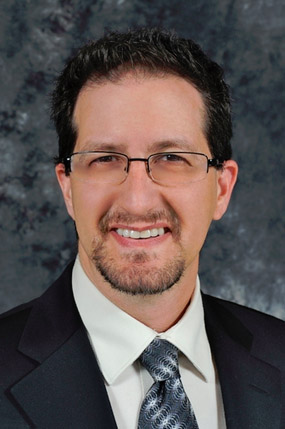
Jarrod Shapiro, DPM
PRESENT Practice Perfect Editor
[email protected]

This blog and the overall sponsorship of PRESENT Podiatry was made possible through the support of our sponsors:








Comments
There are 0 comments for this article