

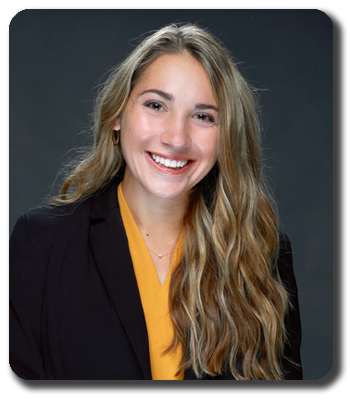
Sole Purpose 45
What I Wish I Knew My First Year
of Medical School
What I Wish I Knew My First Year
of Medical School

Today, let's throw it back to my days as a first-year podiatric medical student—oh, the things I wish I knew back then! To all the brand-new students out there, hang in there! It does get better. Not easier, mind you, but you’ll get better at managing the metaphorical fire hose that is medical school. And speaking of handling the pressure, I once wrote an article on imposter syndrome that I think every new med student should read—trust me, once you can see that everyone else feels the same way as you it is a GAME CHANGER. You can read the article here: Sole Purpose 11 - Imposter Syndrome and Starting Medical School.
You’re going to make mistakes
Yep, it sucks. It actually is my least favorite thing in the entire world. I know you worked SO HARD to get into college—great grades, tons of volunteering, you were basically amazing, and that’s why your school saw value in you and accepted you! But medical school? Whole different ball game. You’re brand new at this, and yeah, you’re going to slip up, maybe even fail for the first time ever. Be open to trying new study methods and, most importantly, cut yourself some slack. You’re learning! Mistakes are going to happen and that’s okay, AS LONG AS you learn from your mistakes.
I failed one of my first exams during my first semester of medical school. Crushed doesn’t even begin to describe it. I had a lot of personal stuff going on, wasn’t studying as much as I should’ve, and hadn’t figured out the study method that worked best for me. I got a 69% on an exam where I needed a 70% to pass. Heartbreaking. I sobbed and doubted myself for months, and it really hurt my class rank. But guess what? I survived, passed the retake, and came out stronger. I met with our LEAD office, tried new study habits, and eventually found a method that clicked. Believe it or not, I went on to become an academic tutor, was ranked highly in my class, got Student of the Year, and matched into my #1 choice for residency. I’m not saying this to brag, but to show you—it ended up being JUST FINE. But I can confidently tell you I never felt like it was going to be fine. I slipped up, but I learned, and I adjusted and I am better because of it!

Find a faculty mentor or a big buddy you want to imitate
Seriously, it’s no secret that I LOVED (and still love) my podiatric medical school faculty. I was lucky enough to be assigned a faculty mentor who I met with regularly for guidance and help. She was AMAZING. Talking to her still makes me feel like I can conquer the world with enough hard work and like I really am the person who can change the world. She uplifted me, encouraged me, and got me pumped to be part of the podiatric community. Like I said, amazing. But I didn’t stop there; I found other faculty members I looked up to and wanted to emulate. Western and the podiatric community is FULL of plenty of incredible people that I look up to and can only DREAM of being like in my career. There is an abundance of phenomenal role models and game-changers in podiatry.

There is an abundance of phenomenal role models and game-changers in podiatry.
In addition to my faculty mentor, I was assigned a “big buddy,” a student one year ahead of me who could guide me through the chaos. HE WAS ALSO AWESOME. Your brand new, so don’t be afraid to ask these people questions and seek guidance, especially if they *say* they want to help you! Mark Twain once said he imitated the writers he admired most—that’s exactly what I tried to do with my mentors in pod school and even now.
Don’t suffer in silence
Seriously, ASK FOR HELP. THERE ARE SO MANY RESOURCES! My podiatry school had tutoring services, the LEAD office for study and test-taking techniques, a school counselor for mental health support, study groups—you name it, they had it. Find out what your school offers! If you’re struggling with anything, see if there’s a resource to help. There’s absolutely nothing wrong with struggling—medical school is REALLY hard, and trust me, everyone struggles, even if they pretend, they don’t.



Make friends, but tread lightly
One of my best friends in the entire world is from podiatric medical school. We became cherished roommates and now, despite being on opposite ends of the U.S., she’s my go-to confidant for residency struggles. I made a few amazing friends in pod school, and I met some truly incredible people! But remember, you’ll be with these folks for the next four years, and the podiatric medical community is tiny. Be careful and try not to stir up drama. Word travels fast, especially during externships (those 4th-year rotations) and residency interviews. You’ll need friends to lean on, and it’s incredible to have people in your life who truly get what you’re going through. But let’s be real—not everyone is meant to be your BFF. Be kind to everyone and try to never speak poorly of someone unless it’s to a person you really trust.
LEARN YOUR ANATOMY
Seriously, I can’t stress this enough—surgery is basically applied anatomy. Having a rock-solid foundation in lower extremity anatomy makes a world of difference when you start diving into surgical techniques, studying for boards, hitting those third-year rotations, and eventually getting handed the blade for the first time in the OR. Even now, as a resident, I review the anatomy for every case I’m part of. Anatomy is, hands down, the most important class of your first semester. Trust me, you’ll thank yourself later!
Surgery is basically applied anatomy – LEARN IT!
Try to remember how badly you wanted to be here
Medical school is SO hard. The days are long, and it often felt like none of my “regular people” friends and family understood just how much I needed to study or the constant pressure to be doing something. I was constantly missing family and friend events in the name of “studying.” So, I wrote a sticky note on my desk that said, "I GET to be a medical student." It’s a privilege I worked very hard for. This mindset shift helped me get through some of the longer days. I’d also write out “reasons to keep studying”—like wanting to get into a good residency, making a difference in the diabetic community, providing a good life for my future dog (side note: still no dog, no dog for me until after residency), and becoming a great surgeon who helps patients walk again and gives them hope for the future. None of that happens UNLESS I STUDY and pass my exams! It was good motivation for those harder, longer days. And if that didn’t work, I’d reread my personal statement from my med school application. My WHY for wanting to be a podiatric physician and surgeon—it still makes my heart smile to remember just how badly I wanted this career I’ve finally started.

Your first semester doesn’t define your medical career
Trust me, I had a TERRIBLE first semester. I failed a block and had to retake it. There were regular crying sessions, and I felt like I was failing at everything. I seriously questioned whether I had what it took to succeed (seriously, check out my imposter syndrome article for the full Savannah mental spiral). BUT I SURVIVED AND GOT BETTER! I found my people—those I could study with and genuinely loved being around. I figured out a schedule that actually worked for me. Neither of those things happened until the start of the second semester, and even then, I still struggled through my second semester, my second year (and my third and my fourth). But hey, I made it!
Know how you refill your cup
In my first two years of medical school, I was in really good shape because the only way I could mentally escape the chaos was by going for a run. I had a set schedule every day: a 6 am run or gym session, and by 8 am, I was showered and either in class or watching lectures online. For me, it was all about taking one night off a week to see family, friends, or my boyfriend (still my boyfriend—he’s awesome) and daily exercise. I’m also someone who LOVES being outside, so I’d go on “flashcard walks” where I’d literally walk laps around my neighborhood doing my Anki cards (a flashcard app1). It might’ve made me look a little psychotic, but it really helped break up my day and keep me happy.
In conclusion, I’d never say that medical school gets easier or that it’s a walk in the park for anyone. It’s incredibly hard. But as I write this as a first-year intern, I can tell you it’s absolutely worth it. Recently, I had the opportunity to perform a TMA revision on a patient, from skin to skin. When he first came in, he was septic and furious—he told me he hated me, felt awful, and despised the hospital. I ordered an MRI, discovered a large abscess, and we took him to surgery. The next day, when I checked on him post-op, his WBC had finally resolved. He was sitting up in bed, smiling, and he told me he felt so much better. He even thanked me and called me "Doctor" for the first time—a far cry from the anger and yelling I’d received before. But it’s true—I’m his doctor, and I helped him feel better.
I’ve had patients tell me I’m their favorite provider, thank me for holding their hand, and express gratitude for advocating for the care they needed. Nothing warms my heart more than when I’m on call and rush to the ED, seeing the relief on a familiar patient’s face as they say, "Oh, thank God, Dr Santiago, I’m so happy to see you!"
"Oh, thank God, Dr Santiago, I’m so happy to see you!"
The grind of medical school is tough, but it’s all worth it to start a career in what I consider the best specialty ever. Keep going! I promise you’ll look back and be amazed at how far you and your knowledge have come. I’m cheering for you!


- https://apps.ankiweb.net.
Follow this link
Overall sponsorship of PRESENT Podiatry was made possible through
the support of our sponsors:

















Comments
There are 0 comments for this article