

Tinea Pedis – Athlete’s Foot


Introduction: Tinea pedis, commonly known as athlete’s foot, is a dermatophytic infection affecting the skin of the feet.1 Tinea pedis can be classified into three primary subtypes: interdigital, hyperkeratotic (moccasin-type), and vesiculobullous (inflammatory). There are two variants of tinea pedis: erythrasma and tinea incognito.2 Many patients with tinea pedis have concurrent fungal infections in other areas of the body. Tinea pedis often occurs alongside tinea unguium, a dermatophytic infection of the nail unit.7
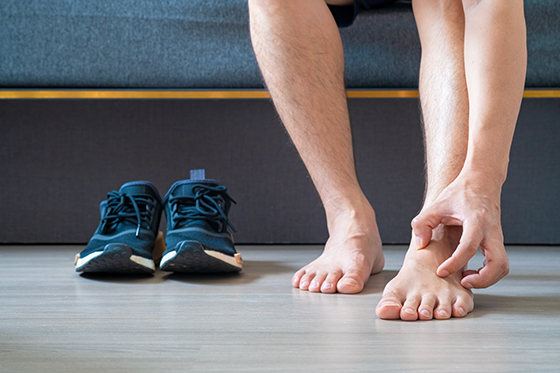
Patient Impact: Tinea pedis significantly impacts patients’ quality of life due to its persistent symptoms, such as itching and discomfort, which can impair mobility and hinder the ability to perform daily activities.3 Additionally, patients may experience psychological distress due to the visible skin changes and social stigma against fungal infections.
Clinical Outline:
- Etiology
- The most common invading organisms include Trichophyton rubrum, Trichophyton interdigitale, and Epidermophyton floccosum
- Presentation
- There are three primary subtypes associated with tinea pedis: interdigital tinea pedis, hyperkeratotic (moccasin-type) tinea pedis, and vesiculobullous (inflammatory) tinea pedis
- There are two variants associated with tinea pedis: erythrasma and tinea incognito
- Diagnostics
- Common diagnostic tools for tinea pedis include histologic analysis, fungal culture, KOH staining, wood’s lamp examination, and dermoscopy
- Treatment
- Treatment of tinea pedis includes topical antifungal agents, oral antifungal agents, betadine, and gentian violet
- Topical antifungal medications are ranked by efficacy from most to least effective as follows: allylamines, azoles, and undecylenic acids
- Oral antifungal medications are ranked by efficacy from most to lease effective as follows: terbinafine, itraconazole, griseofulvin


Expert Opinion from Warren Joseph, DPM, FIDSA:
On the interrelationship between tinea pedis and onychomycosis…
Fungal infections of the skin and nail often coexist, although the clinical characteristics might not always be present. A fungus present on the skin can act as a reservoir to infect the nails and conversely, a fungus on the nails can act as a reservoir to infect the skin. It is important to recommend treatment for both tinea pedis and onychomycosis concurrently, especially when clinical signs of infection were present.
On the differentiation of dermatophytosis simplex and complex…
The terms “dermatophytosis simplex” and “dermatophytosis complex” are underutilized in physicians. In the 1993 article “Progression of Interdigital Infections from Simplex to Complex,” Dr Leyden highlighted the role of the environment in patients presenting with tinea pedis.29 Fungal infections thrive in warm, moist environments and exposure to such conditions can worsen the infection, leading to symptoms such as draining, blistering, and erythema. However, when the environment is controlled by mitigating factors that decrease warmth and moisture, the severity of the infection decreases, making it easier to treat with antifungal therapy. Physicians should be aware of these definitions as they emphasize the importance of environmental changes in managing tines pedis.
On the use of topical antifungals for tinea pedis…
Current treatment for tinea pedis by most physicians involves topical antifungal therapy and preventative measures. However, I believe that oral antifungals are underutilized for tinea pedis. Given that concurrent fungal infections of the skin and nails are common, a short course or pulsed dose of oral can effectively treat these infections.
On the preventive measures for tinea pedis…
Keeping the feet dry is important when managing tines pedis. Patients can use drying foot powders or moisture-controlling socks to achieve this. Unfortunately, research noting the efficacy of preventative measures for tinea pedis is still limited. Interestingly, physicians should reconsider UV light sterilizers for shoes as an alternative solution, given their past effectiveness. This aspect of sterilizing still requires further research.



Etiology: Dermatophytes are anthropophilic, zoophilic, and geophilic organisms that rely on keratin for growth. The most common species of dermatophytes causing cutaneous dermatophytosis are Microsporum, Trichophyton, and Epidermophyton.2 Among the species, the most common invading organisms include Trichophyton rubrum, Trichophyton interdigitale, and Epidermophyton floccosum.7,8,9,10
Once the fungus adheres to the skin, dermatophytes release proteases and fungalysins to break down the keratin in the stratum corneum, enabling fungal hyphae to invade the superficial epidermis.11 Fortunately, dermatophytes cannot penetrate deeper tissue layers in an immunocompetent individual. Instead, the invading organisms spread centrifugally outwards.6
Epidemiology: 70% of individuals worldwide will be diagnosed with tinea pedis at some point of their lives.4 Moreover, 3-10% of the world population is diagnosed with tinea pedis at any given time.5,6 Males are more likely to develop tinea pedis compared to females, by a ratio of approximately 3:1. Individuals whose feet are exposed to prolonged sweating and humidity are at a higher risk of developing and spreading tinea pedis. This is evident in the increased prevalence among those who walk barefoot in locker rooms and community showers, reside in long-term care facilities, or experience homelessness. Predisposing factors for developing tinea pedis include diabetes mellitus, poor personal hygiene, obesity, and immunodeficiencies.6
Presentation: There are three primary subtypes associated with tinea pedis: interdigital tinea pedis, hyperkeratotic (moccasin-type) tinea pedis, and vesiculobullous (inflammatory) tinea pedis.6 There are two variants associated with tinea pedis: erythrasma and tinea incognito.
Interdigital Tinea Pedis: This condition is characterized by scaling and macerations in the interdigital spaces, most commonly affecting the third interspace. Patients may experience symptoms of burning and pain to affected regions.12 Patients with this subtype are more likely to develop fissures which can act as portals for secondary bacterial infection.6
Hyperkeratotic Tinea Pedis: This condition is characterized by diffuse annular scaling with possible erythema on the heels, soles, and sides of the foot. Areas of infection likely correspond to areas of the foot in contact with shoes, earning the nickname “moccasin type.”6 Patients who wear occlusive socks, experience hyperhidrosis of the feet, or have poor pedal hygiene are at most risk for developing this subtype.13
Vesiculobullous Tinea Pedis: This condition is characterized by pruritic and/or painful bulbous eruptions between 1-3mm in diameter on the skin. Vesicles may contain purulent fluid, indicating a secondary bacterial co-infection.6,12
Erythrasma: This condition is characterized by interdigital scaling and macerations.14 Symptoms include pain and burning to the affected interspaces. Although similar in presentation to interdigital tinea pedis, erythrasma is a bacterial infection caused by Corynebacterium minutissimum.15
Tinea Incognito: This condition is characterized by increased scaling and itching in areas previously unaffected by the invading fungus. This variant develops when patients are prescribed corticosteroids or immunosuppressive agents instead of anti-fungal medications when treating tinea pedis.23

Diagnostics: Diagnosis of tinea pedis is initially based on physical examination. However, this methodology is unreliable as several dermatologic pathologies can mimic tinea pedis.16 Therefore, other diagnostic modalities are recommended for confirmation.
Histology: Microscopic exam reveals hyperkeratosis and acanthosis of the affected skin.6 Hyphae between the parakeratotic stratum corneum and upper un-infected stratum corneum will create a basket weave appearance, coined the “sandwich sign.”17 Additionally, neutrophils will be present in the dermis.6
Fungal Culture: This method is considered the gold standard diagnostic tool for tinea pedis by most physicians. In a pooled analysis of five studies involving 484 patients, the sensitivity and specificity of diagnostic culture was 41.7% and 77.7%, respectively.18
KOH Staining: A scraping of the affected skin is mixed with a solution of potassium hydroxide and microscopically analyzed. In the same pooled analysis mentioned above, the sensitivity and specificity of KOH was reported to be 73.3% and 42.5%.18
Wood’s Lamp: A handheld source of long wave ultraviolet light. A blue-green-yellow color indicates tinea pedis.20 A coral-red color indicates erythrasma.19
Dermoscopy: A noninvasive hand-held tool for bedside dermatologic evaluation. Tinea pedis presents with whitish scales along the plantar creases with areas of erythema. Tinea incognito presents with a morse code-like hairs that appear transparent and weakened with unusual bends.21,22
Treatments: The three primary subtypes of tinea pedis are treated with topical antifungal agents, betadine, gentian violet, or oral antifungal agents.
Topical Antifungal Agents: Creams and lotions are considered the first line treatment of tinea pedis. Products can be purchased over the counter or prescribed by a treating physician. Agents include allylamines (eg terbinafine), azoles (eg ketoconazole), undecylenic acids, and synthetic thiocarbamate (eg tolnaftate). A systemic review of 65 manuscripts determined that efficacy of topical antifungal therapies rank in the following order: allylamines, azoles, and undecylenic acids.25 Antifungal powder can also be an effective option for treating tinea pedis and is considered equally efficacious as lotion/cream counterparts, though studies with higher levels of evidence are needed.28
Betadine: This therapy has both antibacterial and antifungal properties, making it a primary antiseptic agent for skin infections. Although high level evidence studies do not exist, single institution studies confirm the efficacy of betadine in the treatment of tinea pedis compared to placebo.26 Other names of this product include povidone-iodine.
Gentian Violet: This topical therapy has both antibacterial and antifungal properties.27 High quality studies analyzing the efficacy of this agent are lacking. Other names of this product include hexamethyl pararosaniline, crystal violet, methyl violet.
Oral Antifungal Agents: This therapy is considered a secondary treatment option for tinea pedis. Agents include oral allylamines (eg terbinafine), azoles (eg itraconazole), and griseofulvin. A systemic review of 48 publications determined that efficacy of oral antifungal therapies rank in the following order: terbinafine, itraconazole, and griseofulvin.24 Although oral agents may be more effective in treating tinea pedis, their potential side effects limit their use to severe infection or infections that fail topical treatment.4

Erythrasma can be treated with both topical and oral antibacterial therapies. Topical agents include clindamycin, erythromycin, and mupirocin. Oral agents include clarithromycin, erythromycin, and various tetracyclines. Topical treatments are the primary option due to the harmful side effects associated with oral medications.14
Tinea incognito is treated by discontinuing the prescribed steroid or immunosuppressive agent and initiating correct antifungal therapy. Additionally, patients should wear loose clothes and avoid sharing bed linens, towels, clothes, and shoes with others.23
Prevention: Interventions that reduces transmission are based on environmental modifications. Patients are recommended to lower their skin moisture levels by using drying foot powders, moisture-controlling socks, and thoroughly drying feet after bathing. Patients should also refrain from using occlusive footwear for prolonged periods.6
Conclusion: Tinea pedis, also known as athlete’s foot, is a prevalent fungal infection affecting a significant portion of the global population. There are three primary subtypes: interdigital, hyperkeratotic (moccasin-type), and vesiculobullous (inflammatory). Diagnostic methods include clinical analysis, histology, fungal culture, KOH staining, wood’s lamp, and dermoscopy. Treatments include topical antifungals, oral antifungals, betadine, and gentian violet. Erythrasma, a cutaneous manifestation of Corynebacterium minutissimum, mimics the physical exam characteristics of interdigital tinea pedis, but requires antibacterial therapies. Tinea incognito refers to increasing erythematous and pruritic skin areas due to improper use of steroids.


- Ely JW, Rosenfeld S, Seabury Stone M. Diagnosis and management of tinea infections. Am Fam Physician. 2014;90(10):702-710.
Follow this link
- Hainer BL. Dermatophyte infections. Am Fam Physician. 2003;67(1):101-108.
Follow this link
- Khan MI, Kashif M, Iqbal J, et al. Depression in patients with fungal infection in tertiary care hospital. J Pak Assoc Dermatol. 2019;29(4):402-408.
Follow this link
- Ward H, Parkes N, Smith C, Kluzek S, Pearson R. Consensus for the Treatment of Tinea Pedis: A Systematic Review of Randomised Controlled Trials. J Fungi (Basel). 2022;8(4):351. Published 2022 Mar 29. doi:10.3390/jof8040351.
Follow this link
- Patel S, Meixner JA, Smith MB, McGinnis MR. Topical Dermatology: Chapter 17 - Superficial Mycoses and Dermatophytes. (Tyring SK, Lupi O, Hengge UR, eds.). Churchill Livingstone; 2006:185-196.
- Leung AK, Barankin B, Lam JM, Leong KF, Hon KL. Tinea pedis: an updated review. Drugs Context. 2023;12:2023-5-1. Published 2023 Jun 29. doi:10.7573/dic.2023-5-1.
Follow this link
- Toukabri N, Dhieb C, El Euch D, Rouissi M, Mokni M, Sadfi-Zouaoui N. Prevalence, Etiology, and Risk Factors of Tinea Pedis and Tinea Unguium in Tunisia. Can J Infect Dis Med Microbiol. 2017;2017:6835725. doi:10.1155/2017/6835725
Follow this link
- Sasagawa Y. Internal environment of footwear is a risk factor for tinea pedis. J Dermatol. 2019;46(11):940-946. doi:10.1111/1346-8138.15060
Follow this link
- Ilkit M, Durdu M. Tinea pedis: the etiology and global epidemiology of a common fungal infection. Crit Rev Microbiol. 2015;41(3):374-388. doi:10.3109/1040841X.2013.856853
Follow this link
- Jiang Y, Luo W, Verweij PE, et al. Regional Differences in Antifungal Susceptibility of the Prevalent Dermatophyte Trichophyton rubrum. Mycopathologia. 2021;186(1):53-70. doi:10.1007/s11046-020-00515-z
Follow this link
- Tainwala R, Sharma Y. Pathogenesis of dermatophytoses. Indian J Dermatol. 2011;56(3):259-261. doi:10.4103/0019-5154.82476
Follow this link
- Al Hasan M, Fitzgerald SM, Saoudian M, Krishnaswamy G. Dermatology for the practicing allergist: Tinea pedis and its complications. Clin Mol Allergy. 2004;2(1):5. Published 2004 Mar 29. doi:10.1186/1476-7961-2-5
Follow this link
- Vlahovic TC. The Role of Naftifine HCl 2% Gel and Cream in Treating Moccasin Tinea Pedis. J Drugs Dermatol. 2016;15(2 Suppl):s56-s59.
Follow this link
- Forouzan P, Cohen PR. Erythrasma Revisited: Diagnosis, Differential Diagnoses, and Comprehensive Review of Treatment. Cureus. 2020;12(9):e10733. Published 2020 Sep 30. doi:10.7759/cureus.10733
Follow this link
- Ramesh V, Passi S. Erythrasma - A Red Herring in the Ongoing Epidemic of Tinea. Indian Dermatol Online J. 2022;13(4):497-499. Published 2022 Jun 24. doi:10.4103/idoj.idoj_10_22
Follow this link
- Goto T, Nakagami G, Takehara K, et al. Examining the accuracy of visual diagnosis of tinea pedis and tinea unguium in aged care facilities. J Wound Care. 2017;26(4):179-183. doi:10.12968/jowc.2017.26.4.179
Follow this link
- Park YW, Kim DY, Yoon SY, et al. 'Clues' for the histological diagnosis of tinea: how reliable are they? Ann Dermatol. 2014;26(2):286-288. doi:10.5021/ad.2014.26.2.286
Follow this link
- Levitt JO, Levitt BH, Akhavan A, Yanofsky H. The sensitivity and specificity of potassium hydroxide smear and fungal culture relative to clinical assessment in the evaluation of tinea pedis: a pooled analysis. Dermatol Res Pract. 2010;2010:764843. doi:10.1155/2010/764843
Follow this link
- Ponka D, Baddar F. Wood lamp examination. Can Fam Physician. 2012;58(9):976.
Follow this link
- Dyer JM, Foy VM. Revealing The Unseen: A Review of Wood's Lamp in Dermatology. J Clin Aesthet Dermatol. 2022;15(6):25-30.
Follow this link
- Bhat YJ, Keen A, Hassan I, Latif I, Bashir S. Can Dermoscopy Serve as a Diagnostic Tool in Dermatophytosis? A Pilot Study. Indian Dermatol Online J. 2019;10(5):530-535. Published 2019 Aug 28. doi:10.4103/idoj.IDOJ_423_18
Follow this link
- Lim SS, Shin K, Mun JH. Dermoscopy for cutaneous fungal infections: A brief review. Health Sci Rep. 2022;5(1):e464. Published 2022 Jan 6. doi:10.1002/hsr2.464
Follow this link
- Zacharopoulou A, Tsiogka A, Tsimpidakis A, Lamia A, Koumaki D, Gregoriou S. Tinea Incognito: Challenges in Diagnosis and Management. J Clin Med. 2024;13(11):3267. Published 2024 May 31. doi:10.3390/jcm13113267
Follow this link
- Martin-Lopez JE. Athlete's foot: oral antifungals. BMJ Clin Evid. 2015;2015:1712. Published 2015 Sep 24.
Follow this link
- Hart R, Bell-Syer SE, Crawford F, Torgerson DJ, Young P, Russell I. Systematic review of topical treatments for fungal infections of the skin and nails of the feet. BMJ. 1999;319(7202):79-82. doi:10.1136/bmj.319.7202.79
Follow this link
- Manna VK, Pearse AD, Marks R. The effect of povidone-iodine paint on fungal infection. J Int Med Res. 1984;12(2):121-123. doi:10.1177/030006058401200210
Follow this link
- Maley AM, Arbiser JL. Gentian violet: a 19th century drug re-emerges in the 21st century. Exp Dermatol. 2013;22(12):775-780. doi:10.1111/exd.12257
Follow this link
- Ongsri P, Bunyaratavej S, Leeyaphan C, et al. Efficacy of Antifungal Cream Versus Pow-Der in the Treatment of Fungal Foot Skin Infection and Unpleasant Odor at Medical Department of Thai Naval Rating School. Southeast Asian J Trop Med Public Health. 2018;49(2):297-302.
Follow this link
- Leyden JJ. Progression of interdigital infections from simplex to complex. J Am Acad Dermatol. 1993;28(5 Pt 1):S7-S11. doi:10.1016/s0190-9622(09)80301-0
Follow this link
Overall sponsorship of PRESENT Podiatry was made possible through
the support of our sponsors:



















Comments
There are 0 comments for this article